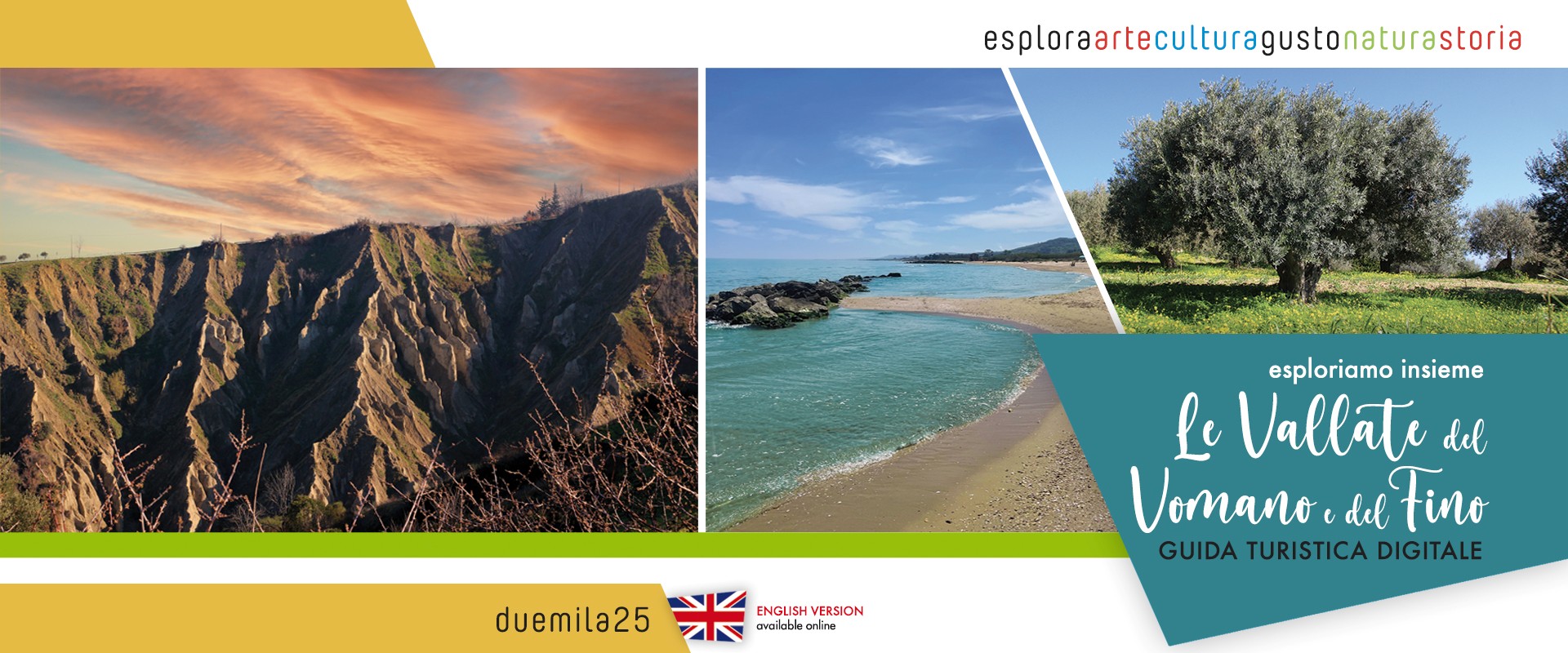
 Situato su un colle ad un’altitudine di circa 300 metri sul livello del mare, Castiglione Messer Raimondo domina la valle del fiume Fino. A occidente si staglia l’imponente catena del Gran Sasso, mentre a oriente si estende la fertile valle del Fino. A nord e a sud, il territorio è punteggiato da colline, ripidi pendii, fossi e valli in continua trasformazione geologica, mentre lungo le ghiaie del fiume Fino si sviluppano numerosi calanchi. Il paesaggio è perciò incantevole per la sua bellezza variegata e affascina con le sue asperità geofisiche. L’abitato conserva il fascino del borgo medievale, con il suo nucleo storico caratterizzato da scalinate, viuzze strette e tortuose. Il territorio di Castiglione ha ospitato insediamenti umani fin dalla preistoria, come testimoniano le cuspidi di frecce in selce rinvenute presso il fiume Fino e a San Giorgio, risalenti al Neolitico. L’età del ferro è attestata da sepolcri e tombe isolate, mentre il tempio di San Giorgio, risalente all’epoca italica (III-II secolo a.C.), rappresenta un esempio significativo dell’architettura templare preromana. La struttura, costruita in legno su un podio di pietra, era rivestita di materiale fittile policromato, una tecnica tipica dei santuari italici dell’epoca.
 Durante il Medioevo il borgo si sviluppò attorno a vari centri fortificati, come il “Castrum Castellionis”, il “Castrum Apignani” e il “Castrum Sancti Georgi”. Nel periodo bizantino, Castiglione rientrava in un sistema difensivo che si estendeva fino alla Calabria, per poi passare sotto il dominio longobardo e franco. Il toponimo “Castiglione” potrebbe riferirsi sia alla funzione militare del borgo, sia a una struttura destinata alla pastorizia. A partire dal X secolo, Castiglione entrò nell’orbita normanna e successivamente sotto il controllo degli Acquaviva, divenendo parte del Regio Stato allodiale di Atri nel 1464. Il paese fu protagonista di eventi storici rilevanti, dalla rivoluzione sociale dell’Ottocento ai moti carbonari, fino alla partecipazione ai conflitti nazionali, con numerosi caduti e decorati nelle due guerre mondiali.
Castiglione offre ai suoi visitatori un ricco patrimonio architettonico e storico. Sulla sommità del colle svetta la Chiesa madre di San Donato, completata nel XVIII secolo sopra una preesistente struttura medievale, custodisce le reliquie del santo e una preziosa croce processionale del XV secolo, realizzata in lamina d’argento e rame dorato. Al centro della sua facciata, si staglia il campanile con orologio.
 Il Palazzo De Leone, costruito nel XVII secolo nel Rione Sant’Antonio, era la residenza della nobile famiglia De Leone. Attualmente appartiene alla famiglia Luciani e conserva ambienti affrescati e la Cappella di Sant’Antonio Abate.
La Chiesa di Santa Lucia, risalente al Settecento, è un piccolo edificio sacro situato in Via Cavour. All’interno si conserva un affresco particolarmente interessante che raffigura la Santa.
Altri luoghi di culto meritevoli di una visita si trovano sparsi nelle frazioni che circondano Castiglione, come ad esempio Appignano, dove sorge la Chiesa di San Pietro, edificata nel XII secolo e poi ricostruita tra il 1735 e il 1780. L’interno in stile settecentesco, è a navata unica e ospita cinque altari dedicati alla Santa Croce, alla Madonna del Rosario, a San Carlo Borromeo, alle Anime Sante e a San Filippo Neri.
 Nei pressi della località Piani troviamo invece la Chiesa di San Giovanni Bosco. L’edificio presenta una copertura a capanna, con una facciata caratterizzata da un portale ad arco acuto con lunetta. L’interno combina una struttura più antica con una più recente, formando una doppia navata a “V” convergente verso l’unico altare.
Un’altra meta imperdibile è il convento di San Francesco, situato nei pressi del fondovalle, lungo la strada per Bisenti e che, secondo la tradizione, fu fondato proprio da San Francesco nel 1215, durante una sua visita nella zona.
L’economia locale si basa su un’agricoltura fiorente, con coltivazioni di cereali, legumi, ulivi, viti e alberi da frutta. Vi prosperano anche allevamenti di bovini, ovini e suini. Il tessuto economico si completa con un significativo numero di aziende industriali e artigianali.
 La cucina di Castiglione Messer Raimondo esalta la ricchezza del suo territorio e rappresenta una vera e propria esplosione di sapori tipici abruzzesi.
La principale manifestazione di Castiglione è rappresentata dalla celebrazione per il patrono del paese, San Donato Martire, le cui spoglie sono custodite nella chiesa a lui dedicata. La sua festa si celebra il 6 e 7 agosto, attirando numerosi pellegrini anche da fuori regione. Ogni cinque anni, il 7 agosto, il corpo del santo viene portato in una solenne processione lungo le vie del borgo, unendo la comunità in un sentito momento di fede e tradizione.
Da non perdere Cinque Gocce, la prima festa dell’olio un evento unico dedicato all’essenza dell’olio castiglionese, dove cultura e sapori si fondono per dare vita ad un’esperienza che celebra la vera anima del territorio.
Located on a hill at an altitude of about 300 meters above sea level, Castiglione Messer Raimondo dominates the valley of the Fino river. To the west stands the imposing Gran Sasso mountain range, while to the east extends the fertile Fino valley. To the north and south, the territory is dotted with hills, steep slopes, ditches and valleys in continuous geological transformation, while along the gravel of the Fino river numerous gullies develop. The landscape is therefore enchanting for its varied beauty and fascinates with its geophysical asperities. The town retains the charm of the medieval village, with its historic center characterized by stairways, narrow and winding streets. The territory of Castiglione has hosted human settlements since prehistoric times, as evidenced by the flint arrowheads found near the Fino River and in San Giorgio, dating back to the Neolithic. The Iron Age is attested by sepulchres and isolated tombs, while the temple of San Giorgio, dating back to the Italic era (3rd-2nd century BC), represents a significant example of pre-Roman temple architecture. The structure, built in wood on a stone podium, was covered with polychrome clay material, a technique typical of the Italic sanctuaries of the time.
During the Middle Ages the village developed around various fortified centers, such as the “Castrum Castellionis”, the “Castrum Apignani” and the “Castrum Sancti Georgi”. In the Byzantine period, Castiglione was part of a defensive system that extended to Calabria, and then passed under Lombard and Frankish rule. The toponym “Castiglione” could refer either to the military function of the village, or to a structure intended for pastoralism. Starting from the 10th century, Castiglione entered the Norman orbit and subsequently under the control of the Acquaviva, becoming part of the Royal Allodial State of Atri in 1464. The town was the protagonist of significant historical events, from the social revolution of the 19th century to the Carbonari uprisings, up to participation in national conflicts, with numerous fallen and decorated in the two world wars.
Castiglione offers its visitors a rich architectural and historical heritage. On the summit of the hill stands the Mother Church of San Donato, completed in the 18th century on a pre-existing medieval structure, it houses the relics of the saint and a precious processional cross from the 15th century, made of silver plate and gilded copper. At the center of its façade, stands the bell tower with clock.
The Palazzo De Leone, built in the 17th century in the Sant’Antonio district, was the residence of the noble De Leone family. It currently belongs to the Luciani family and preserves frescoed rooms and the Chapel of Sant’Antonio Abate.
The Church of Santa Lucia, dating back to the eighteenth century, is a small sacred building located in Via Cavour. Inside there is a particularly interesting fresco depicting the Saint.
Other places of worship worthy of a visit are scattered around the hamlets surrounding Castiglione, such as Appignano, where the Church of San Pietro stands, built in the twelfth century and then rebuilt between 1735 and 1780. The interior in eighteenth-century style is with a single nave and houses five altars dedicated to the Holy Cross, Our Lady of the Rosary, San Carlo Borromeo, the Holy Souls and San Filippo Neri.
Near the Piani locality we find the Church of San Giovanni Bosco. The building has a gabled roof, with a façade characterised by a pointed arch portal with a lunette. The interior combines an older structure with a more recent one, forming a double “V” nave converging towards the single altar.
Another unmissable destination is the convent of San Francesco, located near the valley floor, along the road to Bisenti and which, according to tradition, was founded by San Francesco in 1215, during his visit to the area.
The local economy is based on a thriving agriculture, with cultivation of cereals, legumes, olive trees, vines and fruit trees. Cattle, sheep and pig breeding also thrive here. The economic fabric is completed with a significant number of industrial and artisan companies.
The cuisine of Castiglione Messer Raimondo enhances the richness of its territory and represents a real explosion of typical Abruzzo flavors.
The main event of Castiglione is represented by the celebration for the patron saint of the town, San Donato Martire, whose remains are kept in the church dedicated to him. His feast is celebrated on 6 and 7 August, attracting numerous pilgrims even from outside the region. Every five years, on August 7, the body of the saint is carried in a solemn procession along the streets of the village, uniting the community in a heartfelt moment of faith and tradition.
Don't miss Cinque Gocce, the first oil festival, a unique event dedicated to the essence of Castiglionese oil, where culture and flavors blend together to give life to an experience that celebrates the true soul of the territory.