
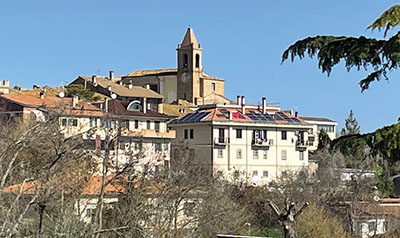
 Castellalto è uno splendido comune che sorge su un colle panoramico tra le vallate del Tordino e del Vomano. Il reperto più antico rinvenuto nel territorio è un bronzetto italico ellenistico (III-II secolo a.C.), scoperto nel 1987 in contrada Casemolino: una statuetta di 10 cm raffigura Ercole con la pelle di leone annodata al collo ed era probabilmente un ex voto, suggerendo la presenza di un insediamento italico legato ai Pretuzi. In epoca romana, Castellalto ospitò insediamenti rurali e ville, come dimostrano reperti archeologici trovati nella zona: tegole, coppi, anfore e fuseruole per telai. Il castello di Castellalto, invece, risale probabilmente all’VIII-IX secolo, in concomitanza con la discesa longobarda e franca, sotto l’influenza dei monaci Benedettini. Nel X secolo il territorio risultava tra i possedimenti dell’abbazia di San Clemente a Casauria. I documenti medievali lo citano come “Castrum Vetus Trasmundi”, sotto l’abbazia di Sant’Attone, e successivamente come “Castrum Vetus Monaciscum”, riferendosi a Castelbasso, borgo fortificato legato a San Clemente a Casauria. Nel Medioevo, Castellalto e Castelbasso passarono sotto vari domini feudali. Dal 1294 al 1494 furono controllati dagli Acquaviva, duchi di Atri, poi ceduti ai Valignani di Chieti e successivamente ai Ricci di Macerata. Lo stemma degli Acquaviva è ancora visibile su un palazzo nel centro storico. Nel 1813, Castellalto e Castelbasso furono riuniti in un unico municipio nel distretto di Teramo. Nel secondo dopoguerra si sviluppò a valle la frazione di Castelnuovo Vomano, che insieme a San Cipriano divenne il principale centro economico e demografico del comune.
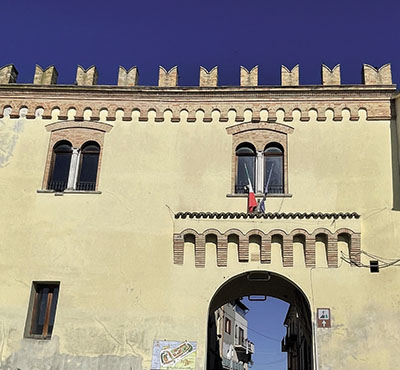 Castellalto è dunque un comune ricco di storia e cultura, che custodisce numerosi monumenti e luoghi di interesse, tra cui chiese storiche, antichi borghi medievali e imponenti mura difensive. Il cuore religioso del paese è rappresentato dalla chiesa Parrocchiale di San Giovanni Evangelista, costruita alla fine del XVI secolo sopra una preesistente, ristrutturata in stile barocco nel XVIII secolo e restaurata dopo il terremoto del 2009. Il suo portale in pietra del 1584 è sormontato da un timpano classico e l’interno, ricco di stucchi e arredi lignei, ospita un pregiato organo a canne.
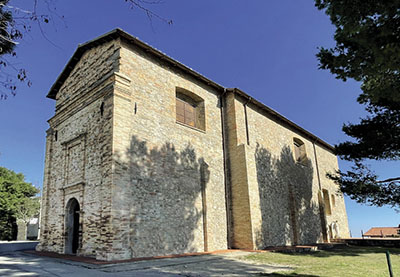
A pochi passi, la Chiesa della Madonna degli Angeli, eretta nel 1580, presenta una struttura semplice e sobria, con una copertura a capanna e un campaniletto a vela.
Per conoscere appieno la storia di Castellalto, è imprescindibile una visita al centro di Castelbasso, un suggestivo borgo fortificato medioevale che conserva numerose tracce delle sue antiche mura di cinta a forma di goccia: un torrione e due porte di accesso ben conservate, Porta Sud e Porta della Marina.
 Il paese, con i suoi vicoli stretti, le piazzette e gli edifici storici, rapisce chiunque lo visiti. Tra i luoghi di maggior interesse, spiccano Palazzo Clemente, Palazzo De Sanctis e Palazzo Cancrini, che raccontano storie di nobiltà e cultura. Inoltre, non può mancare una visita alla chiesa Parrocchiale dei SS. Pietro e Andrea, un esempio notevole di architettura religiosa che arricchisce il panorama artistico del borgo, consacrata nel 1338, conserva un portale trecentesco e affreschi sulle volte che celebrano il trionfo di Cristo. L’interno, a pianta quasi quadrata, è decorato con colonne in mattoni e dipinti barocchi, tra cui una grande pala del XVII secolo raffigurante San Gennaro. Castelbasso è un luogo dove il passato medievale si intreccia con la cultura contemporanea, offrendo una panoramica affascinante della storia di Castellalto e del suo territorio.
Nel territorio di Castellalto, lungo la strada che porta verso Castelnuovo Vomano, si trova inoltre la piccola frazione di Feudo Alto, situata a 421 metri sopra il livello del mare. Su un poggio che domina il paesaggio circostante, si erge un suggestivo vecchio casale di proprietà della famiglia teramana Della Monica.
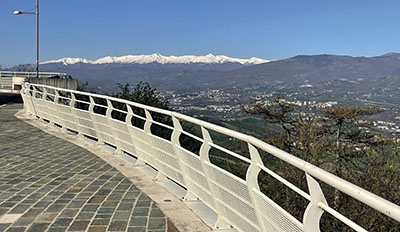 Altra frazione da ammirare è quella di Guzzano, piccolo centro abitato appartenuto per molto tempo alla nobile famiglia degli Acquaviva. Uno degli edifici più significativi è la Chiesa della Madonna del Sambuco dallo stile semplice e sobrio. Un aspetto particolare della chiesa è il fregio in pietra situato tra il portale e il finestrone rotondo, che presenta incisioni raffiguranti motivi floreali e animali.
Castellalto è noto per ospitare ogni anno uno degli eventi più attesi dell’estate abruzzese: il Festival delle birre artigianali. Questo evento, che si tiene ad agosto e dura circa una settimana, trasforma il centro storico di Castellalto in un punto di riferimento per gli amanti di questa bevanda. Durante il festival, si possono trovare stand che offrono birre prodotte in tutta Italia e in Europa, con una varietà che spazia dalle birre scure e bionde, a quelle weiss, rosse e anche acide, per i più temerari. Oltre alla birra, il festival offre anche concerti, stand gastronomici e un’atmosfera vivace che attira migliaia di persone.
 A Castelbasso, invece, si può partecipare a numerosi eventi culturali organizzati dalla Fondazione Malvina Menegaz per le Arti e le Culture. Questa fondazione è nata con l’obiettivo di rendere Castelbasso un centro di innovazione e produzione artistica e culturale. Durante la stagione estiva, la fondazione organizza eventi che spaziano dall’arte alla letteratura, dal teatro alla musica, offrendo concerti, mostre, attività educative e spettacoli. In sintesi, Castellalto e le sue frazioni sono luoghi ideali per chi ama l’arte, la cultura e la buona birra, con eventi che soddisfano tutti i gusti, sia per chi cerca l’allegria del festival, sia per chi preferisce una serata più rilassante.
Castellalto is a splendid municipality that stands on a panoramic hill between the valleys of Tordino and Vomano. The oldest find discovered in the area is a Hellenistic Italic bronze (3rd-2nd century BC), discovered in 1987 in the Casemolino district: a 10 cm statuette depicting Hercules with a lion's skin tied around his neck and was probably a votive offering, suggesting the presence of an Italic settlement linked to the Pretuzi. In Roman times, Castellalto hosted rural settlements and villas, as shown by archaeological finds in the area: roof tiles, pantiles, amphorae and spindle whorls for looms. The Castellalto Castle, on the other hand, probably dates back to the 8th-9th century, in conjunction with the Lombard and Frankish descent, under the influence of the Benedictine monks. In the 10th century the territory was among the possessions of the Abbey of San Clemente a Casauria. Medieval documents cite it as “Castrum Vetus Trasmundi”, under the Abbey of Sant’Attone, and later as “Castrum Vetus Monaciscum”, referring to Castelbasso, a fortified village linked to San Clemente a Casauria. In the Middle Ages, Castellalto and Castelbasso passed under various feudal dominions. From 1294 to 1494 they were controlled by the Acquaviva, dukes of Atri, then ceded to the Valignani of Chieti and subsequently to the Ricci of Macerata. The Acquaviva coat of arms is still visible on a building in the historic center. In 1813, Castellalto and Castelbasso were united in a single municipality in the district of Teramo. After the Second World War, the Castellalto and Castelbasso developed. downstream is the hamlet of Castelnuovo Vomano, which together with San Cipriano became the main economic and demographic center of the municipality.
Castellalto is therefore a municipality rich in history and culture, which preserves numerous monuments and places of interest, including historic churches, ancient medieval villages and imposing defensive walls. The religious heart of the town is represented by the Parish Church of San Giovanni Evangelista, built at the end of the 16th century on a pre-existing one, renovated in Baroque style in the 18th century and restored after the 2009 earthquake. Its stone portal from 1584 is surmounted by a classical tympanum and the interior, rich in stucco and wooden furnishings, houses a valuable pipe organ.
A few steps away, the Church of the Madonna degli Angeli, built in 1580, has a simple and sober structure, with a gabled roof and a bell gable.
To fully understand the history of Castellalto, it is a visit to the center of Castelbasso is essential, a charming medieval fortified village that preserves numerous traces of its ancient drop-shaped city walls: a tower and two well-preserved access gates, Porta Sud and Porta della Marina.
The town, with its narrow streets, small squares and historic buildings, captivates anyone who visits it. Among the places of greatest interest, Palazzo Clemente, Palazzo De Sanctis and Palazzo Cancrini stand out, which tell stories of nobility and culture. Furthermore, it cannot Don't miss a visit to the Parish Church of SS. Pietro and Andrea, a notable example of religious architecture that enriches the artistic panorama of the village, consecrated in 1338, it preserves a fourteenth-century portal and frescoes on the vaults that celebrate the triumph of Christ. The interior, with an almost square plan, is decorated with brick columns and baroque paintings, including a large 17th-century altarpiece depicting San Gennaro. Castelbasso is a place where the medieval past intertwines with contemporary culture, offering a fascinating overview of the history of Castellalto and its territory.
In the territory of Castellalto, along the road that leads to Castelnuovo Vomano, there is also the small hamlet of Feudo Alto, located 421 meters above sea level. On a hill overlooking the surrounding landscape, stands a charming old farmhouse owned by the Teramo family Della Monica.
Another hamlet to admire is Guzzano, a small town that belonged to the noble Acquaviva family for a long time. One of the most significant buildings is the Church of the Madonna del Sambuco with its simple and sober style. A particular aspect of the church is the stone frieze located between the portal and the round window, which features engravings depicting floral and animal motifs.
Castellalto is known for hosting one of the most important events in the area every year: the Stone Frieze. expected of the Abruzzo summer: the Craft Beer Festival. This event, which takes place in August and lasts about a week, transforms the historic center of Castellalto into a point of reference for lovers of this drink. During the festival, you can find stands offering beers produced throughout Italy and Europe, with a variety that ranges from dark and blonde beers, to weiss, red and even sour ones, for the more daring. In addition to beer, the festival also offers concerts, food stands and a lively atmosphere that attracts thousands of people.
In Castelbasso, on the other hand, you can participate in numerous cultural events organized by the Malvina Menegaz Foundation for Arts and Cultures. This foundation was created with the aim of making Castelbasso a center of innovation and artistic and cultural production. During the summer season, the foundation organizes events ranging from art to literature, from theater to music, offering concerts, exhibitions, educational activities and shows. In short, Castellalto and its hamlets are ideal places for those who love art, culture and good beer, with events that satisfy all tastes, both for those looking for the joy of the festival and for those who prefer a more relaxing evening.