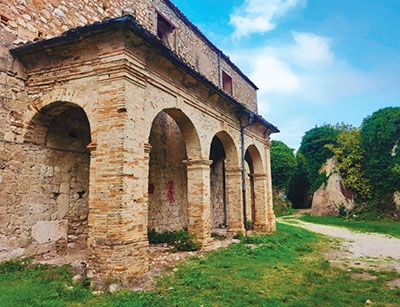
 Sant’Egidio alla Vibrata è un suggestivo borgo medievale situato sulle colline vibratiane, a meno di 30 chilometri da Teramo. Come molti dei centri di questo territorio, può vantare origini assai antiche, risalenti addirittura al Paleolitico superiore. Sappiamo da Plinio il Vecchio che Sant’Egidio fu un vico romano con il nome di Ilium; fu amministrato dai Romani fino alla caduta dell’Impero d’Occidente, quando fu colpito da un periodo di saccheggiamenti e distruzione. Tuttavia, sotto la dominazione dei Longobardi, il borgo, così come il territorio circostante, fu caratterizzato da una grande ripresa economica e sociale: essi infatti cominciarono a fortificare il centro limitrofo di Faraone, ed è probabile che da qui prese vita la città di Sant’Egidio per come la conosciamo oggi. Di questa lunga storia sono testimoni i luoghi di interesse che ne fanno una interessante meta turistica. In primo luogo, è ancora possibile visitare proprio le rovine dell’antico borgo medievale di Faraone, ormai disabitato: le mura perimetrali di difesa, l’arco della porta meridionale, nonché la Chiesa di S.Maria delle Misericordie. Il piccolo centro si trova tra i paesi di Villa Lempa e Sant’Egidio alla Vibrata, a pochi chilometri dal capoluogo comunale, al confine tra i territori dell’ascolano e del teramano. L’intero insediamento sorge raccolto su una modesta altura che si eleva tra profondi fossati.
 A Sant’Egidio, invece, è degna di nota la Chiesa di S.Egidio Abate: nata come priorato monastico dell’abbazia benedettina di Monte Santo e costruita almeno nella prima metà del XII secolo, essa presenta da un lato uno stile romanico a tre navate con abside rotonda; tuttavia, a seguito delle lotte fra ascolani e teramani per la rivendicazione del possesso della Valle del Vibrata, nel 1304 furono distrutte parte della chiesa e del convento, così i lavori di rifacimento e di ristrutturazione furono eseguiti nel segno dello stile gotico, a quel tempo affermatosi anche in Abruzzo. Nel 1555, il vescovato di Ascoli realizzò l’innalzamento del campanile.
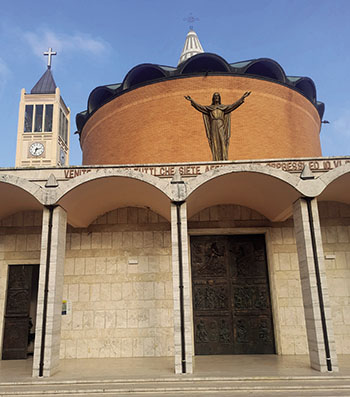
Su Corso Matteotti si affaccia poi la Parrocchia del Sacro Cuore di Gesù, progettata nel 1948 da Dante Tassotti, un architetto marchigiano, secondo lo stile neoromanico e inaugurata nel 1953. La struttura presenta una pianta quadrata con una cupola centrale su tamburo circolare e campanile laterale a torre. La facciata è impreziosita da portico e immagine di Cristo Benedicente. In contrada Paolantonio, poco distante da Sant’Egidio, è possibile invece visitare la Chiesetta di S. Maria, all’interno di Villa Rozzi, progettata nel 1973 dall’architetto milanese Raffaele Radicioni.
Oggi, la presenza di un fondamentale distretto industriale nel settore tessile (maglifici, camicerie, jeanserie, produttori di stoffe e tessuti per tappezzeria, biancheria, tende, tendaggi, abiti da ballo, abbigliamento sportivo,...) pone Sant’Egidio tra i comuni più trainanti dello sviluppo economico e produttivo della provincia teramana.
Sant’Egidio alla Vibrata is a enchanting medieval village located on the Vibratian hills, less than 30 kilometers from Teramo. Like many of the centers in this area, it can boast very ancient origins, dating back to the Upper Paleolithic. We know from Pliny the Elder that Sant’Egidio was a Roman vico with the name of Ilium; it was administered by the Romans until the fall of the Western Empire, when it was hit by a period of looting and destruction. However, under the domination of the Lombards, the village, as well as the surrounding area, was characterized by a great economic and social recovery: in fact, they began to fortify the neighboring center of Faraone, and it is likely that the city of Sant’Egidio as we know it today came to life here. This long history is witnessed by the places of interest that make it an interesting tourist destination. First of all, it is still possible to visit the ruins of the ancient medieval village of Faraone, now uninhabited: the perimeter defense walls, the arch of the southern gate, as well as the Church of S. Maria delle Misericordie. The small center is located between the villages of Villa Lempa and Sant’Egidio alla Vibrata, a few kilometers from the municipal capital, on the border between the territories of Ascoli and Teramo. The entire settlement is gathered on a modest hill that rises between deep ditches.
In Sant’Egidio, however, the Church of S. Egidio Abate is worthy of note: born as a monastic priory of the Benedictine abbey of Monte Santo and built at least in the first half of the 12th century, it presents on one side a Romanesque style with three naves and a round apse; However, following the battles between the people of Ascoli and Teramo for the claim of possession of the Vibrata Valley, in 1304 part of the church and the convent were destroyed, so the renovation and restructuring works were carried out in the Gothic style, which was also popular in Abruzzo at that time. In 1555, the bishopric of Ascoli had the bell tower erected.
On Corso Matteotti then overlooks the Parish of the Sacred Heart of Jesus, designed in 1948 by Dante Tassotti, an architect from the Marche, according to the neo-Romanesque style and inaugurated in 1953. The structure has a square plan with a central dome on a circular drum and a lateral bell tower. The façade is embellished with a portico and an image of Christ Blessing. In the Paolantonio district, not far from Sant’Egidio, you can visit the S. Maria Church, inside Villa Rozzi, designed in 1973 by the Milanese architect Raffaele Radicioni.
Today, the presence of a fundamental industrial district in the textile sector (knitwear factories, shirt factories, jeans factories, producers of fabrics and textiles for upholstery, linen, curtains, drapes, dance dresses, sportswear,...) places Sant’Egidio among the most driving municipalities of the economic and productive development of the Teramo province.