
 Il borgo di Nereto sorge su una collinetta al centro della Val Vibrata, distante circa 10 km dalla costa adriatica e 50 km dal massiccio montuoso del Gran Sasso d’Italia.
Nereto, come molti centri della val Vibrata, ha origini risalenti al neolitico. Secondo lo studioso neretese Giuseppe De’ Guidobaldi Speranza, i primi abitatori furono coloni originari della Grecia, mentre l’appartenenza di Nereto all’Agro Truentino viene confermata da Nicola Palma. In età Romana, il centro abitato sorgeva nell’odierna contrada di San Martino ed il suo nome era Vicus Gallianus, probabilmente possedimento di un certo Gallio o Galliano, a cui era stato concesso per meriti militari. Dopo l’anno 1000 giunsero in queste terre i monaci benedettini che introdussero il culto di san Martino, edificando una chiesa in onore del santo sui ruderi del Vico Galliano. Nel frattempo questo territorio, che dai tempi di Augusto aveva fatto parte del Piceno, fu unito dai Normanni al Regno di Napoli, divenendo così zona di frontiera. Fu infatti re Ruggero II a fissare il confine del regno sul fiume Tronto. L’antico “Casale Nereti” si trasformò, allora, nel più importante Castrum Nereti, acquisendo anche importantissime funzioni militari di difesa.
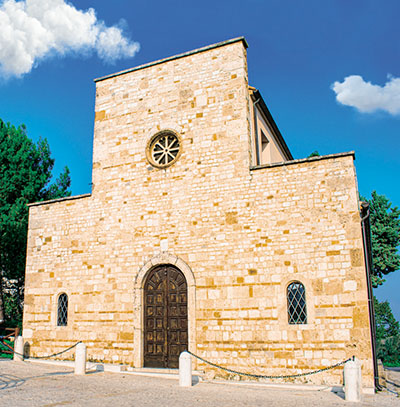
 Proprio per via della sua storia, Nereto offre ai suoi visitatori un centro storico artisticamente notevole. La Fontana Vecchia, costruita nel 1881, fulcro originario della vita del paese, è contigua al vecchio quartiere rinascimentale abbattuto nel dopoguerra. Nell’area permangono solo alcune porzioni del vecchio borgo murato, dove è stato realizzato un anfiteatro in cui si svolgono le manifestazioni teatrali estive. Sono diverse invece le architetture religiose che vale la pena di visitare. Al centro troviamo la chiesa parrocchiale di Maria Santissima della Consolazione, la chiesa di S. Maria del Suffragio, in Piazza Cavour, dove è inoltre possibile ammirare una fontana aggiunta successivamente. Al patrono di Nereto è dedicata poi la Chiesa di San Martino; menzionata già nei documenti risalenti al XII secolo, è aperta solo in poche occasioni tra le quali la festa del Santo. Nel Seicento venne poi edificata la Chiesa di San Rocco, intitolata al protettore della peste. Essa fu infatti eretta al di fuori del borgo, proprio con la funzione simbolica di proteggere gli abitanti dal morbo, oltre che per consentirne la fruizione proprio ai malati.
 Tra le curiosità che caratterizzano questo paesino c’è quella del Miracolo del 1798. Secondo la storia la città venne attaccata dalle truppe francesi, che distrussero le abitazioni, diffusero terrore e seviziarono donne e bambini.
La popolazione reagì con violenza con l’intenzione di uccidere chiunque avesse compiuto questo terribile gesto, ma le truppe francesi decisero di rispondere organizzando una sanguinosa vendetta.
 Una notte, prima che la vendetta potesse consumarsi, una donna che pregava tra i banchi della chiesa sentì le truppe francesi avvicinarsi, corse sul campanile e si mise a suonare le campane per avvisare gli abitanti di Nereto.
Fu così che un gruppo di angeli si palesò davanti agli occhi increduli delle truppe francesi che, terrorizzate, scapparono. Ancora oggi questa storia la si può leggere incisa sulle campane della Chiesa di San Martino.
The village of Nereto stands on a hill in the center of the Val Vibrata, about 10 km from the Adriatic coast and 50 km from the mountain massif of Gran Sasso d’Italia.
Nereto, like many centers of the Val Vibrata, has origins dating back to the Neolithic. According to the scholar from Nereto Giuseppe De’ Guidobaldi Speranza, the first inhabitants were colonists originally from Greece, while the belonging of Nereto to the Agro Truentino is confirmed by Nicola Palma. In the Roman, the town was located in today's district of San Martino and its name was Vicus Gallianus, probably a possession of a certain Gallio or Galliano, to whom it had been granted for military merits. After the year 1000, Benedictine monks arrived in these lands and introduced the cult of San Martino, building a church in honor of the saint on the ruins of Vico Galliano. In the meantime, this territory, which had been part of Piceno since the time of Augustus, was united by the Normans to the Kingdom of Naples, thus becoming a border area. In fact, it was King Roger II who set the border of the kingdom on the Tronto river. The ancient “Casale Nereti” was then transformed into the most important Castrum Nereti, also acquiring very important military defense functions.
Precisely because of its history, Nereto offers its visitors an artistically remarkable historical center. The Old Fountain, built in 1881, the original center of life in the town, is adjacent to the old Renaissance neighborhood demolished after the war. In the area only some portions of the old walled village remain, where an amphitheater was built in which summer theater events are held. There are several religious architectures that are worth visiting. In the center we find the parish church of Maria Santissima della Consolazione, the church of S. Maria del Suffragio, in Piazza Cavour, where it is also possible to admire a fountain added later. The Church of San Martino is dedicated to the patron saint of Nereto; already mentioned in documents dating back to the 12th century, it is only open on a few occasions including the feast of the Saint. In the 17th century the Church of San Rocco was built, dedicated to the protector from the plague. It was in fact built outside the village, with the symbolic function of protecting the inhabitants from the disease, as well as to allow the sick to use it.
Among the curiosities that characterize this village is the Miracle of 1798. According to history, the city was attacked by French troops, who destroyed the homes, spread terror and tortured women and children.
The population reacted with violence with the intention of killing whoever had committed this terrible act, but the French troops decided to respond by organizing a bloody revenge.
One night, before the revenge could be consummated, a woman who was praying in the pews of the church heard the French troops approaching, ran to the bell tower and started ringing the bells to warn the inhabitants of Nereto.
So it was that a group of angels appeared before the incredulous eyes of the French troops who, terrified, ran away. Even today this story can be told read engraved on the bells of the Church of San Martino.