 Alba Adriatica è una splendida località balneare che si estende per circa 10 km² e confina con Colonnella, Corropoli, Martinsicuro e Tortoreto. Situata nella Val Vibrata, comprende le frazioni di Basciani, Casasanta e Villa Fiore. Si tratta di un comune molto giovane: Alba Adriatica faceva parte di Tortoreto, di cui, con il nome di Tortoreto Stazione, fu sede comunale. Il 14 luglio 1956, dopo una campagna elettorale molto accesa, il piccolo quartiere Tortoreto Stazione, con referendum a cui fece seguito il decreto del Presidente della Repubblica, si separò dall’originaria Tortoreto, mutando il proprio nome appunto in quello di Alba Adriatica.
Il suo stemma comunale ritrae in effetti un sole che sorge dal mare, a indicare che nasce una nuova comunità sull’Adriatico.
Sparsi per il suo territorio, sono stati ritrovati numerosi siti neolitici di oltre cinquemila anni fa, soprattutto nella zona ovest, a Ripoli, vicino al campo sportivo di calcio Vallese. Nella costruzione del viale Mazzini, negli anni Sessanta, furono ritrovati resti di anfore e altre indicazioni che, nell’epoca romana, vi erano ville romane e centri di raccolta del sale.
Alba Adriatica è la meta ideale per i turisti in cerca di vacanze ricche di divertimento e attività balneari. Il litorale albense ha ricevuto più volte la Bandiera Blu; in particolare, Alba Adriatica è conosciuta con il nome di Spiaggia d’Argento per la bellezza del lungomare ampio e sabbioso e dalle acque cristalline di colore blu intenso nelle stagioni estive. Il lungomare Guglielmo Marconi è dotato di un’ampia e attrezzata pista ciclabile, una delle prime realizzate in regione, parte integrante del progetto Bike to Coast, la pista ciclabile di 131 chilometri che si snoda da Martinsicuro a San Salvo lungo la via verde dell’Adriatico, in grado di soddisfare le esigenze di chi ama vivere il territorio in modo sostenibile, coniugando lo sport con la scoperta di luoghi, paesaggi e culture.
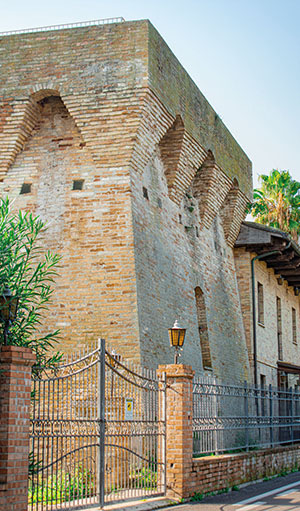
 In questa argentea cittadina di mare, inoltre, è imperdibile la Spiaggia del Fratino e del Giglio di Mare, un’area protetta riconosciuta dal WWF, dedicata alla tutela del piccolo uccello trampoliere e al fiore spontaneo tipico delle coste mediterranee, entrambi in via di estinzione. Non mancano poi i monumenti e i luoghi di interesse. Su tutti, una menzione particolare spetta alla Torre della Vibrata, una torre di guardia a forma piramidale costruita dagli spagnoli nel XVI secolo, con la base superiore cinta di merli guelfi e utilizzata come deposito dei pezzi di artiglieria. Restaurata e riqualificata, è l’unico monumento del Medioevo conservato in buone condizioni, divenuto, negli anni, parte del complesso urbanistico cittadino. Fu edificata durante il regno di Carlo V di Spagna per volere del viceré spagnolo di Napoli, nel 1568, per contrastare i sempre più frequenti attacchi dei Saraceni. Mantenne la funzione di avamposto militare fino all’Ottocento, assieme alle torri di Roseto degli Abruzzi, Tortoreto Alta, Giulianova, Martinsicuro. La torre ha una robusta pianta quadrata con merlature nella cornice superiore. Permetteva di avvistare gli incursori da una distanza di ben dieci miglia sull’Adriatico. La parte superiore non è più praticabile ed è chiusa al pubblico, per motivi di sicurezza.
Le campagne circostanti sono costellate di vigneti, oliveti, colture varie e terreni dediti alla pastorizia. Per questo, Alba Adriatica è una località rinomata anche per la sua proposta gastronomica, che rappresenta una sintesi perfetta dei sapori di terra e di mare della tradizione abruzzese: dai piatti a base di pesce fresco, come brodetto o spaghetti con le vongole, a quelli a base di carne, come la chitarra con le pallottine o il timballo di scrippelle.
Alba Adriatica is a splendid seaside resort that extends for about 10 km² and borders Colonnella, Corropoli, Martinsicuro and Tortoreto. Located in the Val Vibrata, it includes the hamlets of Basciani, Casasanta and Villa Fiore. It is a very young municipality: Alba Adriatica was part of Tortoreto, of which, with the name of Tortoreto Stazione, it was the municipal seat. On July 14, 1956, after a very heated election campaign, the small Tortoreto Stazione neighborhood, with a referendum followed by a decree from the President of the Republic, separated from the original Tortoreto, changing its name to Alba Adriatica.
Its municipal coat of arms actually depicts a sun rising from the sea, indicating that a new community was born on the Adriatic.
Scattered throughout its territory, numerous Neolithic sites from over five thousand years ago have been found, especially in the western area, in Ripoli, near the Vallese football field. During the construction of Viale Mazzini, in the 1960s, amphorae remains and other indications were found that, in Roman times, there were Roman villas and salt collection centers.
Alba Adriatica is the ideal destination for tourists looking for holidays full of fun and seaside activities. The Alba coastline has received the Blue Flag several times; in particular, Alba Adriatica is known as the Silver Beach for the beauty of its wide, sandy promenade and crystal-clear waters of intense blue in the summer seasons. The Guglielmo Marconi promenade is equipped with a large and well-equipped cycle path, one of the first built in the region, an integral part of the Bike to Coast project, the 131-kilometer cycle path that winds from Martinsicuro to San Salvo along the Adriatic greenway, able to satisfy the needs of those who love living the area in a sustainable way, combining sport with the discovery of places, landscapes and cultures.
In this silvery seaside town, moreover, it is Don't miss the Spiaggia del Fratino and Giglio di Mare, a protected area recognized by the WWF, dedicated to the protection of the small wading bird and the spontaneous flower typical of the Mediterranean coasts, both in danger of extinction. There is no shortage of monuments and places of interest. Above all, a special mention goes to the Torre della Vibrata, a pyramid-shaped watchtower built by the Spanish in the 16th century, with the upper base surrounded by Guelph battlements and used as a depot for artillery pieces. Restored and redeveloped, it is the only monument from the Middle Ages preserved in good condition, which has become, over the years, part of the city's urban complex. It was built during the reign of Charles V of Spain at the behest of the Spanish viceroy of Naples, in 1568, to counter the increasingly frequent attacks by the Saracens. It maintained its function as a military outpost until the nineteenth century, together with the towers of Roseto degli Abruzzi, Tortoreto Alta, Giulianova, Martinsicuro. The tower has a robust square plan with battlements on the upper frame. It allowed the raiders to be spotted from a distance of ten miles on the Adriatic. The upper part is no longer accessible and is closed to the public, for security reasons.
The surrounding countryside is dotted with vineyards, olive groves, various crops and lands dedicated to sheep farming. For this reason, Alba Adriatica is a place also renowned for its gastronomic offering, which represents a perfect synthesis of the flavours of land and sea of the Abruzzo tradition: from fresh fish-based dishes, such as brodetto or spaghetti with clams, to meat-based dishes, such as chitarra with meatballs or timballo di scrippelle.