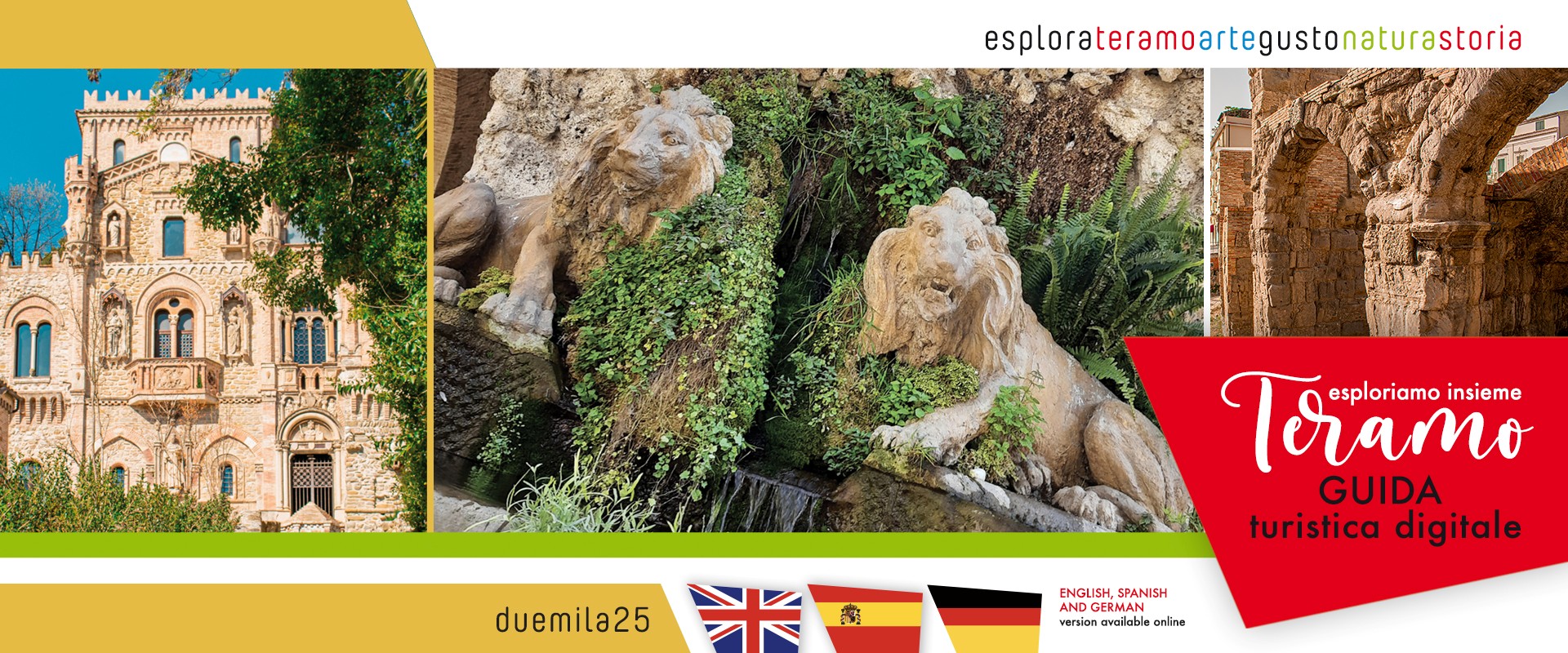
La città di Teramo è uno dei quattro capoluoghi di provincia della regione Abruzzo. Sorge alla confluenza tra il fiume Tordino e il torrente Vezzola, alle pendici del Gran Sasso.
Fondata ai tempi dei Fenici come centro commerciale, fu sottomessa ai Romani che le diedero il nome di Interamnia Urbs, espressione latina, che significa città tra i due fiumi.
Fu proprio durante il dominio degli imperatori Augusto, prima, e Adriano, poi, che la città visse un periodo florido, testimoniato dalla presenza di numerosi monumenti, templi, teatri, anfiteatri e terme ancora oggi parzialmente visibili e visitabili. Il periodo di prosperità ebbe, però, breve durata in quanto, nel 410, la città fu rasa al suolo, per mano dei Visigoti.
Dovranno passare i secoli, e il dominio longobardo e normanno, perché la città ritrovi almeno parte della serenità perduta.
È durante il Medioevo che Teramo ritrova lo splendore di un tempo, nonostante le aspre lotte tra le due signorie, angioina e aragonese.
Nel settecento e nell’ottocento Teramo ebbe un’intensa vita culturale, aprendosi alle idee illuministe di illustri studiosi, come Melchiorre Delfico, a cui diede i natali.
Teramo è una città legata alla tradizione artigiana che ancora oggi sopravvive attraverso le opere delle sapienti mani dei ceramisti di Castelli, dei merlettai di Canzano, dei tessitori di arazzi e tappeti di Nepezzano, degli abilissimi orafi, dei maestri del legno e del ferro battuto... le loro botteghe custodiscono segreti artistici secolari.
Altra arte rinomatissima nel teramano è quella culinaria, un vero inno alla buona tavola, che affonda le sue radici nelle antiche ricette di contadini, pastori e pescatori. Potrete scoprire l’incredibile varietà dei piatti tipici di questa terra, tramandati nel tempo dalle nostre massaie, nella sezione “La cucina della tradizione”.
The city of Teramo is one of the four provincial capitals of the Abruzzo region. It rises at the confluence of the Tordino river and the Vezzola stream, on the slopes of the Gran Sasso.
Founded in the times of the Phoenicians as a commercial center, it was subjected to the Romans who gave it the name of Interamnia Urbs, a Latin expression, which means city between the two rivers.
It was precisely during the dominion of the emperors Augustus, first, and Hadrian, then, that the city experienced a flourishing period, testified by the presence of numerous monuments, temples, theaters, amphitheaters and spas still partially visible and open to visitors. The period of prosperity, however, was short-lived as, in 410, the city was razed to the ground by the Visigoths.
The centuries will have to pass, and the Lombard and Norman dominion, for the city to regain at least part of the lost serenity.
It is during the Middle Ages that Teramo regains the splendor of the past, despite the bitter struggles between the two lords, Angevin and Aragonese.
In the eighteenth and nineteenth centuries Teramo had an intense cultural life, opening up to the Enlightenment ideas of illustrious scholars, such as Melchiorre Delfico, to whom it gave birth.
Teramo is a city linked to the artisan tradition that still survives today through the works of the skilled hands of the potters of Castelli, of the lacemakers of Canzano, of the weavers of tapestries and carpets of Nepezzano, of the skilled goldsmiths, of the masters of wood and wrought iron. .. their shops keep secular artistic secrets.
Another highly renowned art in the Teramo area is the culinary one, a true hymn to good food, which has its roots in the ancient recipes of farmers, shepherds and fishermen. You can discover the incredible variety of typical dishes of this land, handed down over time by our housewives, in the "Traditional cuisine" section.
La ciudad de Teramo es una de las cuatro capitales de provincia de la región de Abruzzo. Nace en la confluencia entre el río Tordino y el arroyo Vezzola, en las laderas del Gran Sasso.
Fundada en época de los fenicios como centro comercial, fue sometida a los romanos quienes le dieron el nombre de Interamnia Urbs, expresión latina, que significa ciudad entre dos ríos.
Fue precisamente durante el reinado de los emperadores Augusto, primero, y Adriano, después, cuando la ciudad experimentó un período de florecimiento, como lo demuestra la presencia de numerosos monumentos, templos, teatros, anfiteatros y balnearios que aún hoy son parcialmente visibles y visitables. El período de prosperidad, sin embargo, duró poco ya que, en el año 410, la ciudad fue arrasada por los visigodos.
Tendrán que pasar siglos y dominaciones lombardas y normandas para que la ciudad recupere al menos parte de su serenidad perdida.
Es durante la Edad Media que Teramo recuperó el esplendor del pasado, a pesar de las amargas luchas entre los dos señoríos, angevinos y aragoneses.
En los siglos XVIII y XIX Teramo tuvo una intensa vida cultural, abriéndose a las ideas ilustradas de ilustres eruditos, como Melchiorre Delfico, que fue su lugar de nacimiento.
Teramo es una ciudad ligada a la tradición artesanal que aún hoy sobrevive gracias a las hábiles manos de los ceramistas de Castelli, los encajeros de Canzano, los tejedores de tapices y alfombras de Nepezzano, los hábiles orfebres, los maestros de la madera y hierro forjado.. sus talleres guardan secretos artísticos centenarios.
Otro arte muy reconocido en la zona de Teramo es el culinario, un verdadero canto a la buena mesa, que hunde sus raíces en las antiguas recetas de agricultores, pastores y pescadores. Podrás descubrir la increíble variedad de platos típicos de esta tierra, transmitidos a lo largo del tiempo por nuestras amas de casa, en el apartado "Cocina tradicional".
Die Stadt Teramo ist eine der vier Provinzhauptstädte der Region Abruzzen. Es entspringt am Zusammenfluss des Flusses Tordino und des Baches Vezzola an den Hängen des Gran Sasso.
Die Stadt wurde zu Zeiten der Phönizier als Handelszentrum gegründet und unterstand dann den Römern, die ihr den Namen Interamnia Urbs gaben, ein lateinischer Ausdruck, der „Stadt zwischen den beiden Flüssen“ bedeutet.
Während der Herrschaft der Kaiser Augustus und später Hadrian erlebte die Stadt eine Blütezeit, wie die zahlreichen Monumente, Tempel, Theater, Amphitheater und Thermen belegen, die teilweise noch heute sichtbar sind und besichtigt werden können. Die Zeit des Wohlstands war jedoch nur von kurzer Dauer, da die Stadt im Jahr 410 von den Westgoten dem Erdboden gleichgemacht wurde.
Es werden Jahrhunderte und die lombardische und normannische Herrschaft vergehen müssen, bis die Stadt zumindest einen Teil ihrer Ruhe verloren hat.
È Im Mittelalter erlangte Teramo trotz der erbitterten Kämpfe zwischen den beiden Herrschaften, den Anjou und den Aragonesen, seinen früheren Glanz zurück.
Im 18. und 19. Jahrhundert herrschte in Teramo ein reges kulturelles Leben und die Stadt öffnete sich den Ideen der Aufklärung berühmter Gelehrter wie Melchiorre Delfico, der hier geboren wurde.
Teramo ist eine Stadt, die eng mit der Handwerkstradition verbunden ist. Diese lebt noch heute in den Werken der geschickten Hände der Keramiker von Castelli, der Spitzenklöpplerinnen von Canzano, der Wandteppich- und Teppichweber von Nepezzano, der hochqualifizierten Goldschmiede, der Meister der Holz- und Schmiedeeisenverarbeitung weiter. Ihre Werkstätten hüten jahrhundertealte künstlerische Geheimnisse.
Eine weitere sehr berühmte Kunst in der Gegend von Teramo ist die Kochkunst, eine wahre Hymne an gutes Essen, die ihre Wurzeln in den alten Rezepten der Bauern, Hirten und Fischer hat. Im Abschnitt „Traditionelle Küche“ können Sie die unglaubliche Vielfalt der typischen Gerichte dieses Landes entdecken, die im Laufe der Zeit von unseren Hausfrauen überliefert wurden.