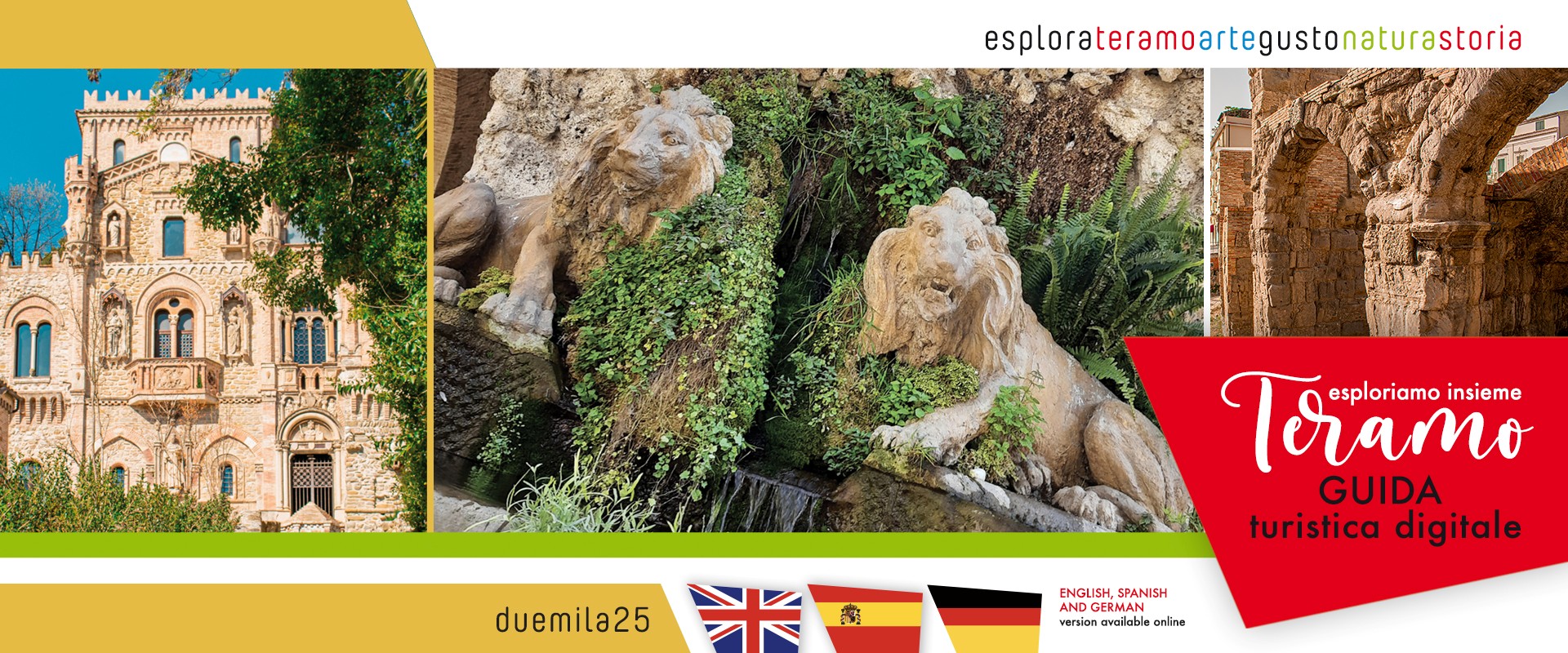



Situato nelle vicinanze del centro storico, il Teatro Romano di Teramo, risalente all’età augustea, rappresenta uno dei monumenti più importanti della città.
Il piano originario si trova al di sotto dell’attuale piano di calpestio e, delle venti arcate che circondavano il Teatro Romano, ad oggi, ne sono rimaste solo due visibili. Il numero di spettatori che il Teatro poteva ospitare nella parte semicircolare chiamata “cavea”, andava dai 2500 ai 3000. Il pubblico veniva accolto nelle gradinate sorrette da una struttura cementizia, composta da pietre di fiume e blocchi di travertino.
Per quanto riguarda la committenza del monumento, alcuni elementi rinvenuti come la presenza di armi, fanno pensare che il Teatro fosse stato commissionato da un altolocato del luogo il quale, dopo aver vinto delle campagne militari e aver ricoperto un qualche ruolo importante all’interno della città, decise di finanziare l’opera monumentale.
Ad oggi la zona circostante il teatro è edificata, per questo è stato possibile rinvenire solamente la parte orientale del palcoscenico.
Located near the historic center, the Roman Theater of Teramo, dating back to the Augustan age, is one of the most important monuments of the city.
The original floor is located below the current floor and, of the twenty arches that surrounded the Roman Theater, to date, only two remain visible. The number of spectators that the Theater could accommodate in the semicircular part called the “cavea” ranged from 2500 to 3000. The public was welcomed in the tiers supported by a concrete structure, made up of river stones and travertine blocks.
As for the commissioning of the monument, some elements found such as the presence of weapons, suggest that the Theater was commissioned by a high-ranking local who, after winning military campaigns and having played some important role within the city, decided to finance the monumental work.
To date, the area surrounding the theater has been built, so it was only possible to find the eastern part of the stage.
Situado cerca del centro histórico, el Teatro Romano de Teramo, que data de la época de Augusto, representa uno de los monumentos más importantes de la ciudad.
El suelo original se sitúa bajo el pavimento actual y, hasta la fecha, sólo quedan visibles dos de los veinte arcos que rodeaban el Teatro Romano. El número de espectadores que el Teatro podía acoger en la parte semicircular llamada "cavea" oscilaba entre 2.500 y 3.000. El público era recibido en unas escaleras sostenidas por una estructura de hormigón, compuesta de piedras de río y bloques de travertino.
En cuanto a la puesta en servicio del monumento, algunos elementos encontrados como la presencia de armas, sugieren que el Teatro fue encargado por un alto personaje local que, después de haber ganado campañas militares y haber desempeñado algún papel importante dentro de la ciudad, decidió financiar la monumental obra.
A la fecha el área que rodea al teatro se encuentra urbanizada, por lo que sólo fue posible encontrar la parte oriental del escenario.
Das Römische Theater von Teramo liegt in der Nähe des historischen Zentrums und stammt aus der Römerzeit. Es ist ein antikes römisches Gebäude. Augustan, stellt eines der wichtigsten Monumente der Stadt dar.
Der ursprüngliche Boden befindet sich unterhalb des aktuellen Bodenniveaus und von den zwanzig Bögen, die das römische Theater umgaben, sind heute nur noch zwei sichtbar. Die Zahl der Zuschauer, die das Theater in dem halbrunden Teil, genannt „Cavea“, aufnehmen konnte, lag zwischen 2.500 und 3.000. Das Publikum wurde auf den Stufen begrüßt, die von einer Betonkonstruktion aus Flusssteinen und Travertinblöcken getragen wurden.
Was die Schirmherrschaft für das Denkmal betrifft, so deuten einige gefundene Elemente, wie beispielsweise das Vorhandensein von Waffen, darauf hin, dass das Theater von einem hochrangigen Mann aus der Gegend in Auftrag gegeben wurde, der sich, nachdem er militärische Feldzüge gewonnen und eine wichtige Rolle in der Stadt gespielt hatte, dazu entschloss, das monumentale Werk zu finanzieren.
Heute ist das Gelände rund um das Theater bebaut, daher konnte nur der östliche Teil der Bühne gefunden werden.